
More medicines.
Less depth.
Automate medication dispensing into labelled unit-dose or multi-dose pouches. Choose 144–224 cassettes in a cabinet just 18.1 inches deep.
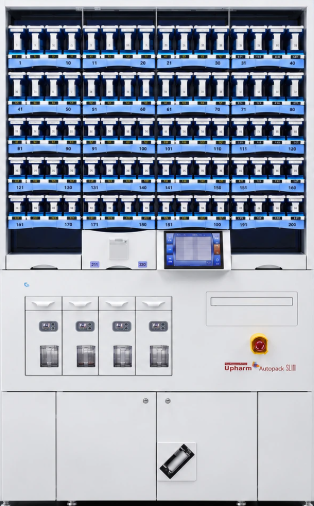
MAKE ROOM FOR YOUR MEDICATION MIX
Will WAP suit your
medication mix?
Review which medicines can use dedicated cassettes and which need separate preparation. Ask to see representative prescriptions run through the proposed configuration.
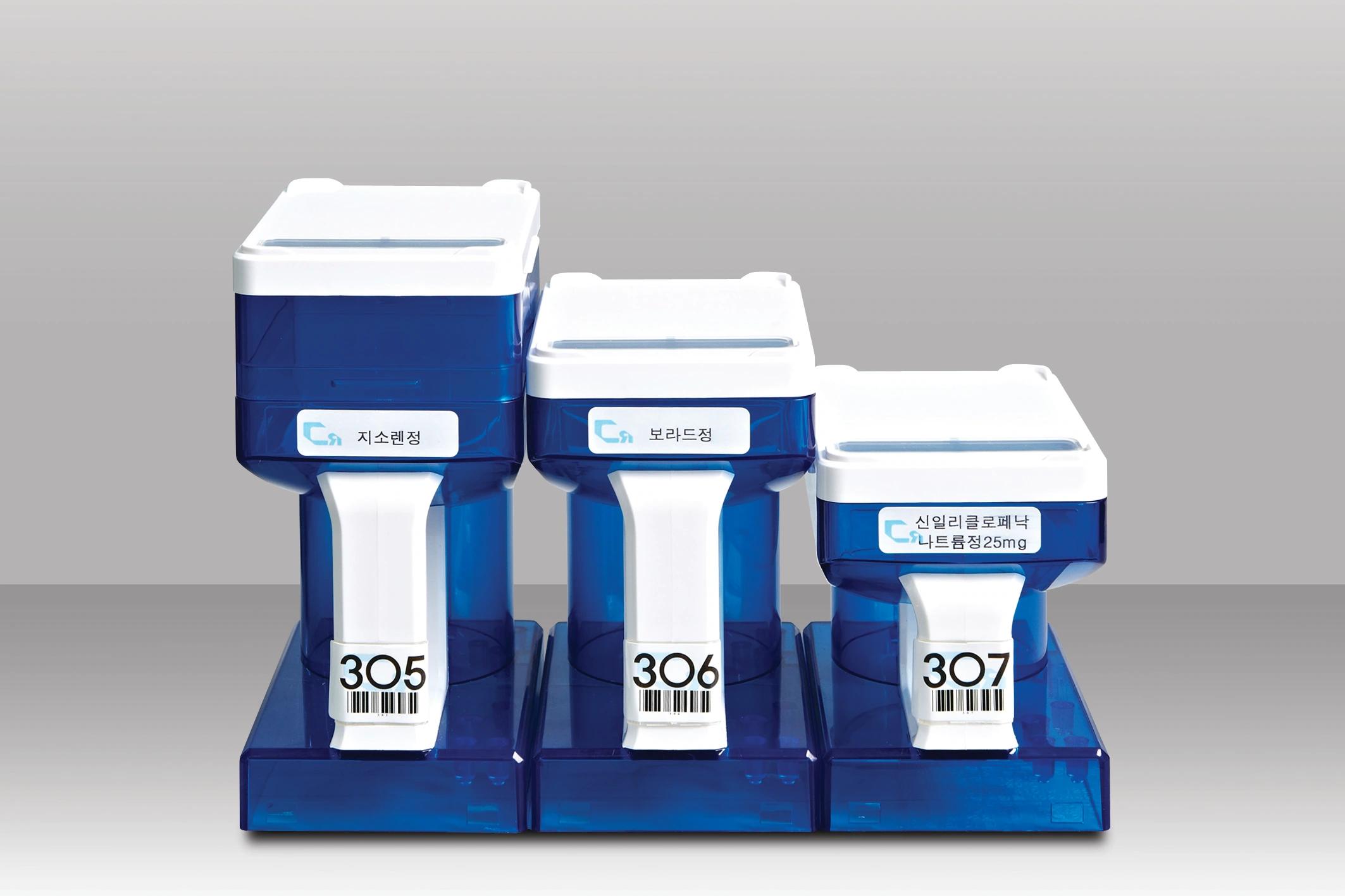 Small · Medium · Large
Three cassette sizes.
Every WAP model combines small, medium and large medication cassettes. The number of small cassettes increases by model; medium and large counts stay the same. Review your medication list with MAXIS to confirm suitability.
Choose around your medicine list, then compare the cassette mix.
Compare each model’s cassette mix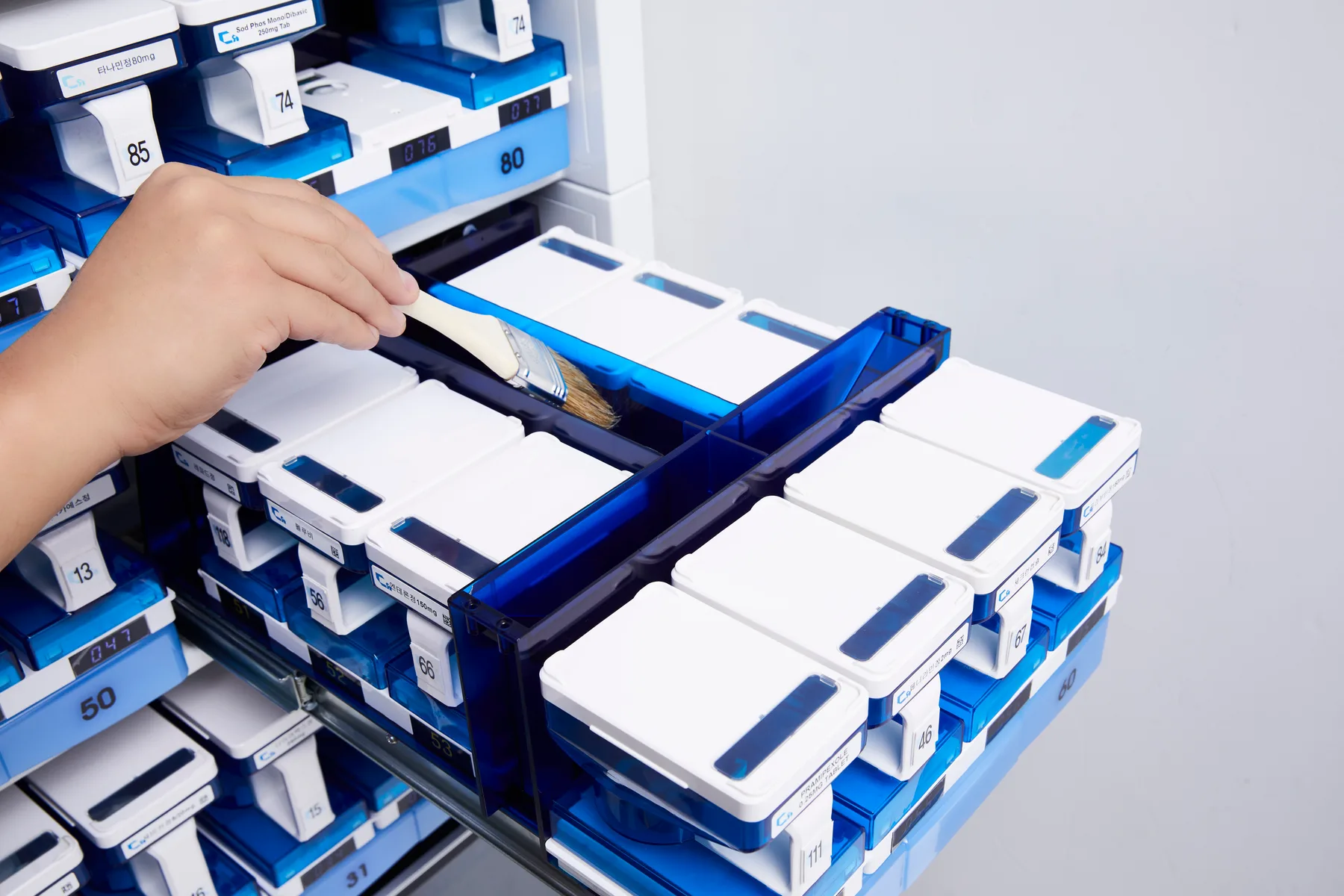
Front access for daily tasks.
T-slide drawers bring cassettes forward for staff to refill and clean. Check the reach and access with the team who will use the machine.
Ask to see replenishment and cleaning during your demonstration.
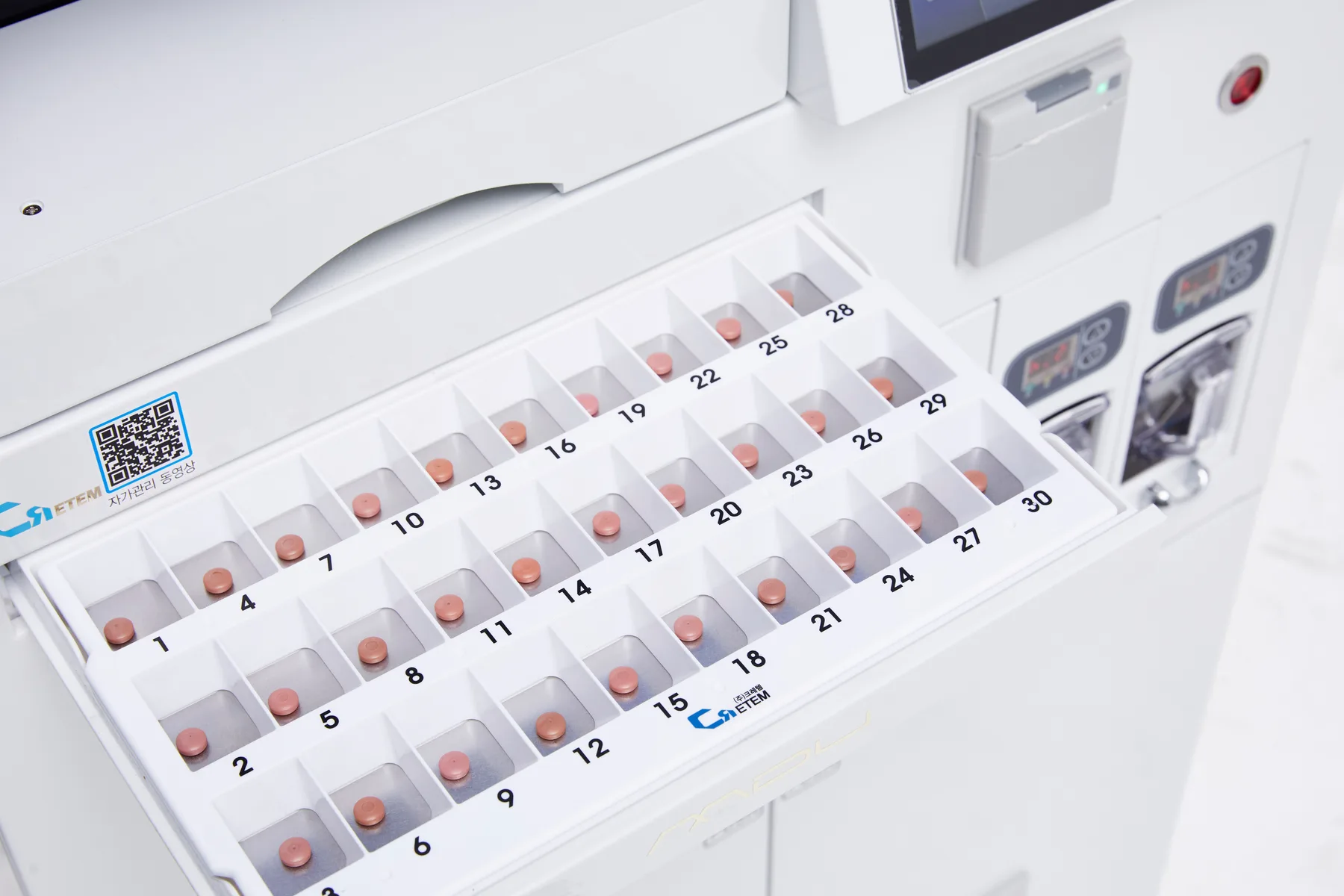
Prepare non-cassette medicines.
Use Free Shape Packing (FSP) or a staff-prepared Manual Divide Unit (MDU) tray for suitable non-cassette medicines. Confirm compatibility and the modules included.
Include half tablets and occasional medicines in your demonstration.
PRODUCT FEATURES
See what makes the workflow work.
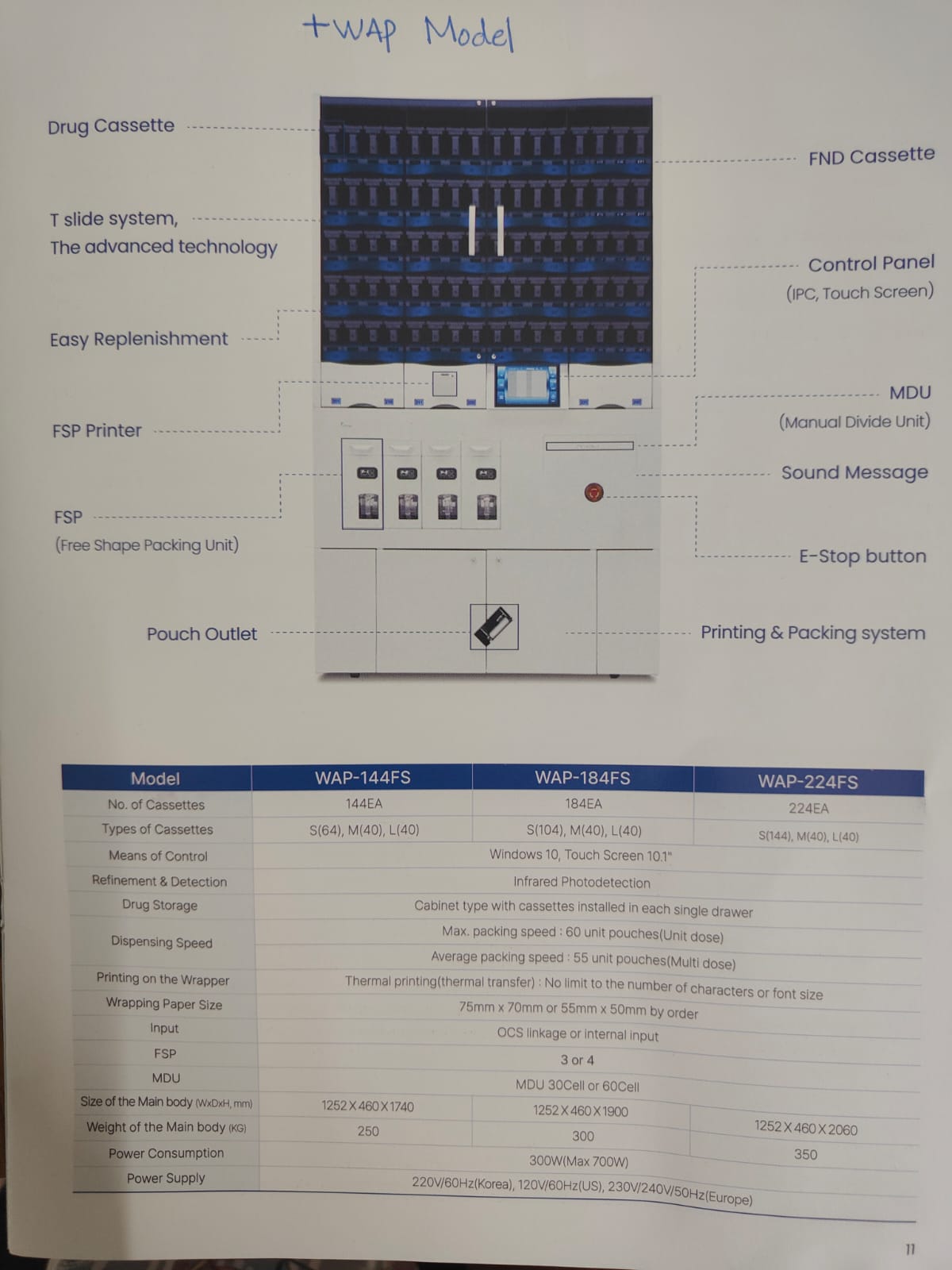
Explore the cassette system, manual preparation paths, controls and packing mechanism. Component photographs show the shared CRETEM FS-series platform.
Small, medium and large cassettes accommodate the configured medication mix. The brochure describes a tablet-stopper mechanism for controlled dispensing; suitability and cassette setup are reviewed for each medication.
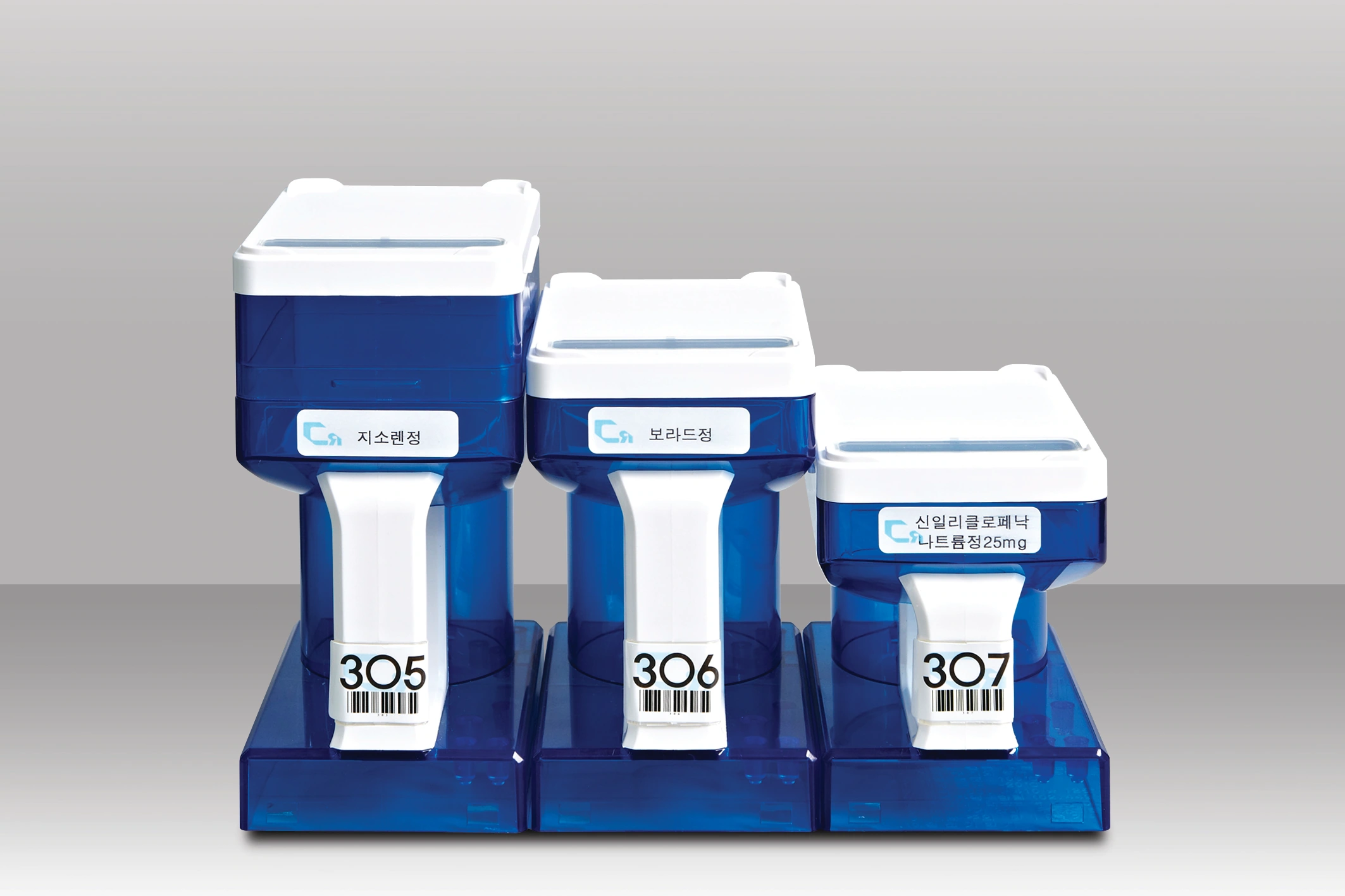
Dedicated medication cassettesShared FS-series component detail Flexible Numeric Display (FND) cassettes use numeric displays and unique identification chips. Compatible front positions help organise frequently replenished medicines. Confirm the supplied FND arrangement.
Draw cassettes forward from the cabinet face to replenish medicines and access the front and sides for cleaning. Plan working clearance for the open drawers, not just the closed cabinet.
Infrared photodetection monitors the dispensing path. This is different from checking the identity and contents of the finished pouch; your pharmacy’s verification remains part of the process.
FSP handles suitable half tablets, irregular shapes and low-frequency medicines without assigning an additional dedicated cassette. The supplied platform brochure also describes automatic collection of remaining medicines. Confirm medication suitability and the module arrangement.
Staff prepare the numbered MDU tray for suitable medicines that are not dispensed from cassettes. Choose the specified 30- or 60-cell arrangement around the manual preparation work in your pharmacy.
FROM ORDER TO POUCH
One connected packaging sequence.
Automatic dispensing and packaging sit within your team’s preparation, verification and release process.
- STEP 01
Receive the order
Use the agreed OCS interface or enter the packaging order on the touchscreen.
- STEP 02
Dispense from cassettes
Configured medication cassettes dispense through an infrared-monitored path.
- STEP 03
Add non-cassette items
Load suitable medicines into the FSP units for automatic dispensing, or fill the MDU tray by hand. Both join the same pouches.
- STEP 04
Print and seal
Print the configured information and seal the medication pouches.
- STEP 05
Check and release
Complete content checks, exception handling and the pharmacy’s release procedures.
See the full sequence before you decide.
Ask to see order entry, cassette dispensing, FSP and MDU preparation, printing and pouch output.
CHOOSE YOUR WAP CONFIGURATION
Size it for today’s medicines and tomorrow’s.
Every WAP shares the same footprint, FSP, MDU and printing. Only cassette positions, height and weight change. Enter two numbers to see which model leaves room to grow.
Drag to fill your cabinet
175 cassette positions needed · one medicine per cassette
Your fit
WAP-184FS
184 positions · 74.8 in high
- Fits your 150 medicines today
- Room for 25 new medicines, 9 spare
Only 9 spare. Consider WAP-224FS if your list could grow further.
Bigger models add small cassettes only. Every WAP has 40 medium and 40 large, so ask MAXIS which size any new medicines need. Every model shares a 49.3 × 18.1 in (1,252 × 460 mm) footprint; clearances are additional.
SPECIFICATIONS AT A GLANCE
Compare all three models
Supplied WAP series specification Scroll the table sideways on smaller screens →
| Model | WAP-144FS | WAP-184FS | WAP-224FS |
|---|---|---|---|
| Medication cassettes | 144 | 184 | 224 |
| Cassette mix · small / medium / large | 64 / 40 / 40 | 104 / 40 / 40 | 144 / 40 / 40 |
| Control panel | 10.1-inch touchscreen; supplied brochure lists Windows 10. Confirm supplied OS and support lifecycle. | ||
| Dispensing detection | Infrared photodetection | ||
| Medication storage | Dedicated cassettes in cabinet drawers; front T-slide access | ||
| Packaging speed | Up to 60 unit-dose pouches/min; brochure average 55 multi-dose pouches/min | ||
| Pouch printing | Thermal transfer; configurable printed content and layout | ||
| Wrapping paper size | 75 × 70 mm; 55 × 50 mm by order | ||
| Order input | OCS (Order Communication System) linkage or internal entry; confirm interface compatibility | ||
| Free Shape Packing (FSP) | 3 or 4 units, depending on configuration | ||
| Manual Divide Unit (MDU) | 30 or 60 cells, depending on configuration | ||
| Main body · W × D × H (mm) | 1,252 × 460 × 1,740 | 1,252 × 460 × 1,900 | 1,252 × 460 × 2,060 |
| Main body · W × D × H (ft, approx.) | 4.11 × 1.51 × 5.71 | 4.11 × 1.51 × 6.23 | 4.11 × 1.51 × 6.76 |
| Published machine weight | 250 kg | 300 kg | 350 kg |
| Listed power consumption | 300 W; maximum 700 W | ||
| Regional supply options | 220 V / 60 Hz (Korea); 120 V / 60 Hz (US); 230–240 V / 50 Hz (Europe). Confirm the supplied electrical configuration. | ||
| Manufacturer / origin | CRETEM / Republic of Korea | ||
PLAN THE COMPLETE INSTALLATION
A good fit goes beyond the cabinet.
Bring your floor plan, medicine list and pharmacy software details. Build the proposal around the equipment and the work around it.
Connect your software
Share your pharmacy software and version. Confirm the OCS interface or internal entry, prescription fields, network requirements and representative test orders.
Explore integration planningPrepare your pharmacy
Plan delivery access, installation clearances, electrical supply and IT. Agree cleaning, cassette replenishment, printer care and operator training.
Talk through site requirementsUnderstand the total cost
Include setup, integration, wrapping material, print ribbon and ongoing service. Validate pouch format and printing with samples from the proposed configuration.
Explore the ROI calculatorMAXIS AFTER-SALES SUPPORT
Support for the everyday.
- One-year limited company warranty
- After-sales service and spare parts
- Consumable supply
- Annual service support for an additional fee
Warranty terms, exclusions, service scope and annual fees are provided with your proposal.
BEFORE YOU DECIDE
Your questions. Clearer answers.
The practical details of choosing, installing and working with WAP.
What makes WAP different from CAP(EX)?
The supplied WAP range offers 144, 184 or 224 cassette positions in a 1,252 mm-wide, 460 mm-deep main body. CAP(EX) is the smaller-capacity 52/72/92 platform. Choose around the medication list, floor plan and manual preparation work rather than cassette count alone.
Can a WAP-144FS be expanded into a WAP-224FS?
The supplied WAP sheet lists three configurations with different heights and weights. It does not establish an in-place expansion path. Ask MAXIS about the specific upgrade options; do not assume CAP(EX)’s extension arrangement applies to WAP.
Does 460 mm depth include working clearance?
No. It is the published main-body depth. Allow for cassette drawers, doors, refilling, FSP and MDU preparation, lower-cabinet service, ventilation, connections and the installation route. Confirm the full installed envelope from an installation drawing.
How many patients can a WAP serve?
Cassette count measures medication positions, not patients. Useful throughput depends on the medication mix, dose schedule, manual additions, operating hours, replenishment and checking time. Use representative prescriptions to assess the configuration.
How fast does the WAP package medicines?
Your supplied WAP sheet lists up to 60 unit-dose pouches per minute and a brochure average of 55 multi-dose pouches per minute. These figures describe packaging, not the total time to prepare and release prescriptions. Verify a representative workload in a demonstration.
What are FSP and MDU used for?
Free Shape Packing handles suitable half tablets, irregular shapes and other non-cassette medicines. The Manual Divide Unit is a numbered tray prepared by staff. The supplied range lists 3 or 4 FSP units and 30 or 60 MDU cells; confirm the options and medication suitability in the proposal.
What can be printed on each pouch?
The thermal-transfer system supports configured patient, medication and administration information and barcodes. Standard wrapping size is listed as 75 × 70 mm, with 55 × 50 mm by order. Validate text layout, contrast, barcode readability and required information on actual samples.
Does infrared detection replace final verification?
No. Infrared photodetection monitors dispensing. It does not establish that the finished pouch contains every correct medication and quantity. Your pharmacy remains responsible for content review, exception handling and final release.
Will WAP connect to our pharmacy software?
The supplied specification lists OCS linkage or internal input. Provide your software name and version, prescription fields, network requirements and sample orders. MAXIS needs to confirm the supported interface, implementation responsibilities and testing for the WAP configuration.
What should we confirm before installation?
Confirm the exact model revision, cassette mix, FSP/MDU options, installed dimensions and weight, access route, work surfaces, cleaning access, electrical supply and IT arrangements. The supplied sheet lists 300 W consumption and 700 W maximum, with regional supply options; the actual machine’s requirements govern installation.
Why do some published WAP specifications differ?
WAP documents describe different configurations and revisions. This page uses the owner-supplied WAP-144FS/184FS/224FS sheet. Other regional listings have different FSP/MDU arrangements, dimensions and weights. The current MAXIS proposal and installation drawing should identify the machine and options being supplied.
What support and consumables should we plan for?
Include training, approved cleaning methods, wrapping material, thermal-transfer ribbon, spare parts, service coverage and ongoing costs in the quotation. The supplied stock-management feature is optional. Confirm warranty and service terms directly with MAXIS rather than assuming another distributor’s package applies.
COMPARE YOUR OPTIONS
Different capacity. The same focus on fit.
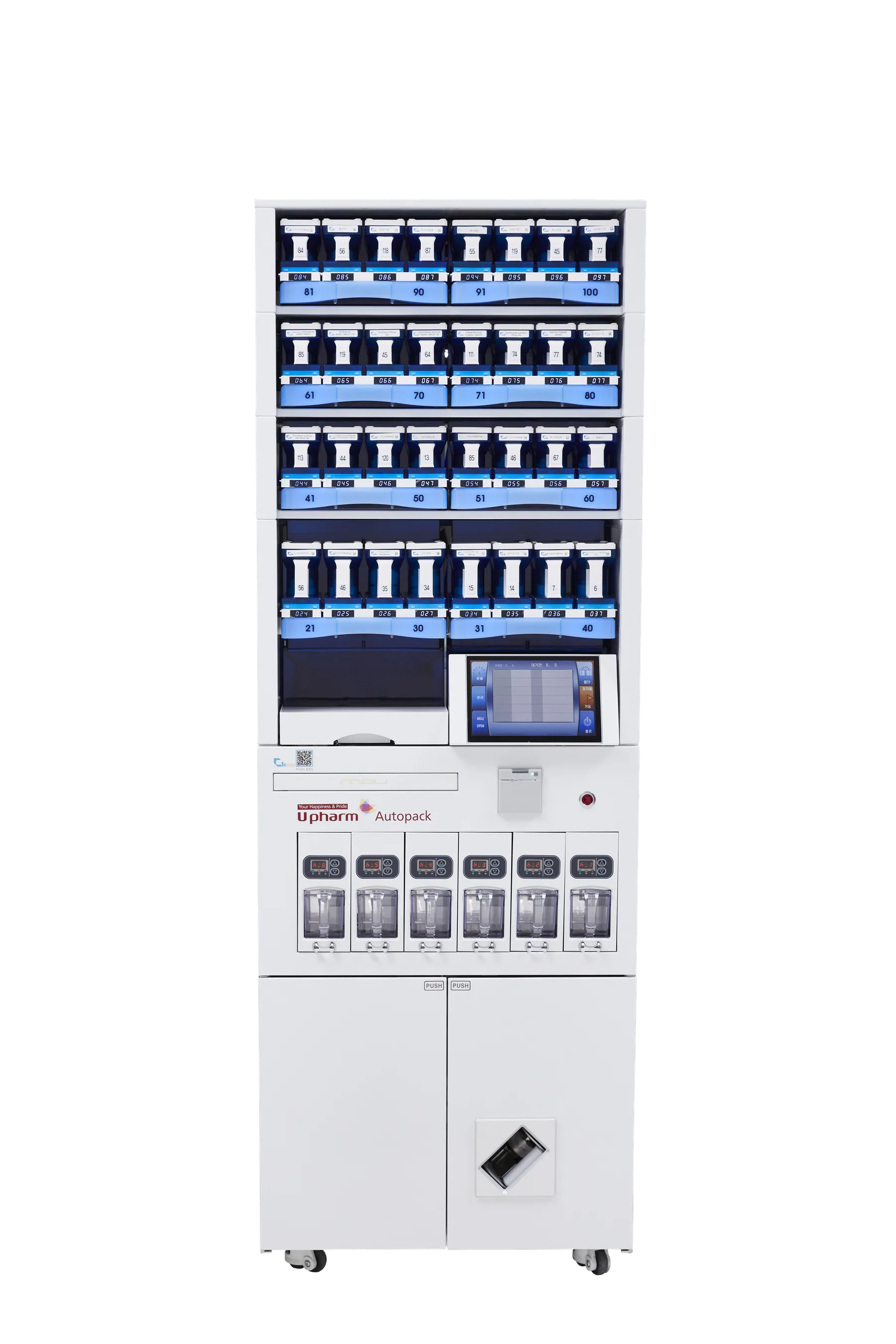
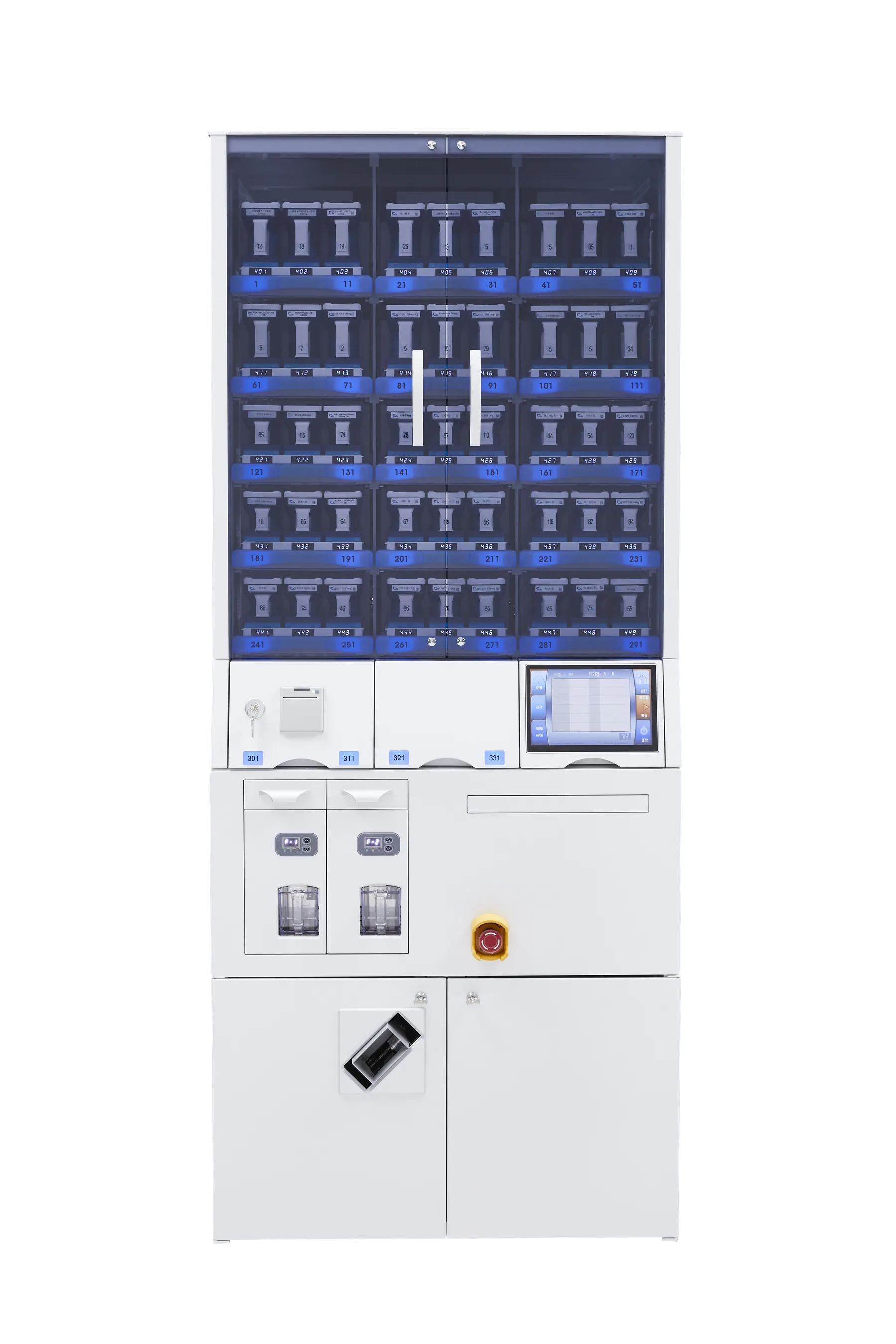
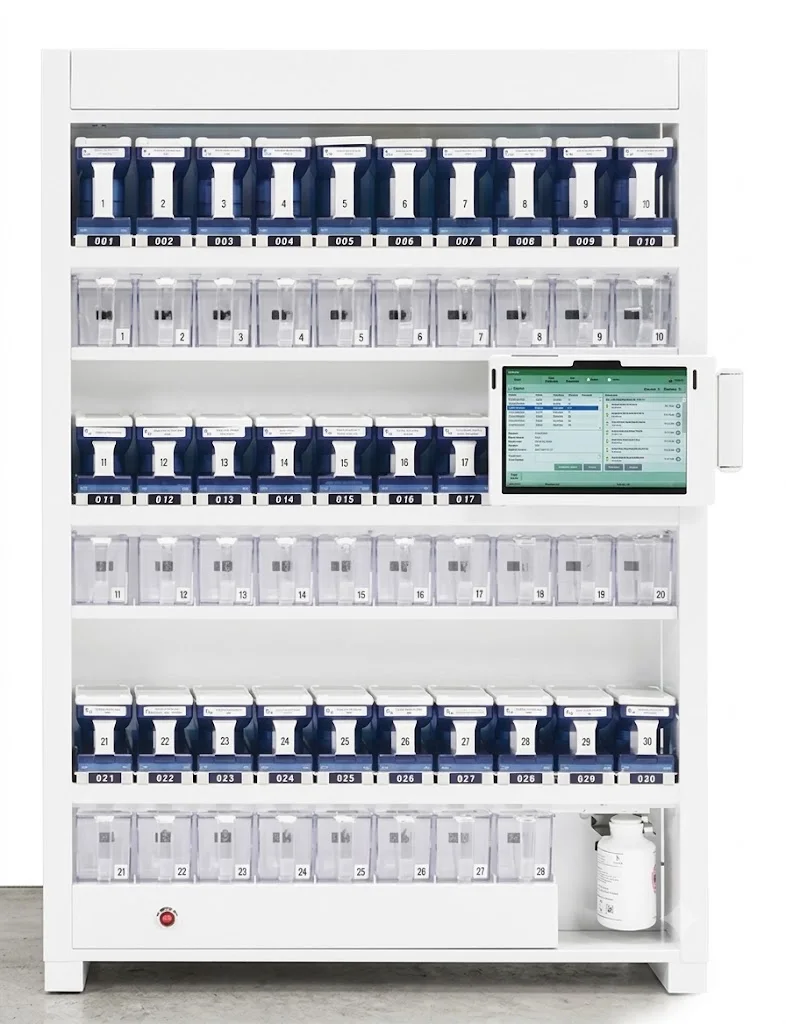
YOUR FLOOR PLAN. YOUR MEDICATION MIX.
Let’s find the WAP that fits.
Bring the space you have and the workflow you want to build.
We’ll help you assess the right configuration.