

CRETEM CAP(EX) · COMMUNITY PHARMACY AUTOMATION
Compact by design.
Ready for your growth.
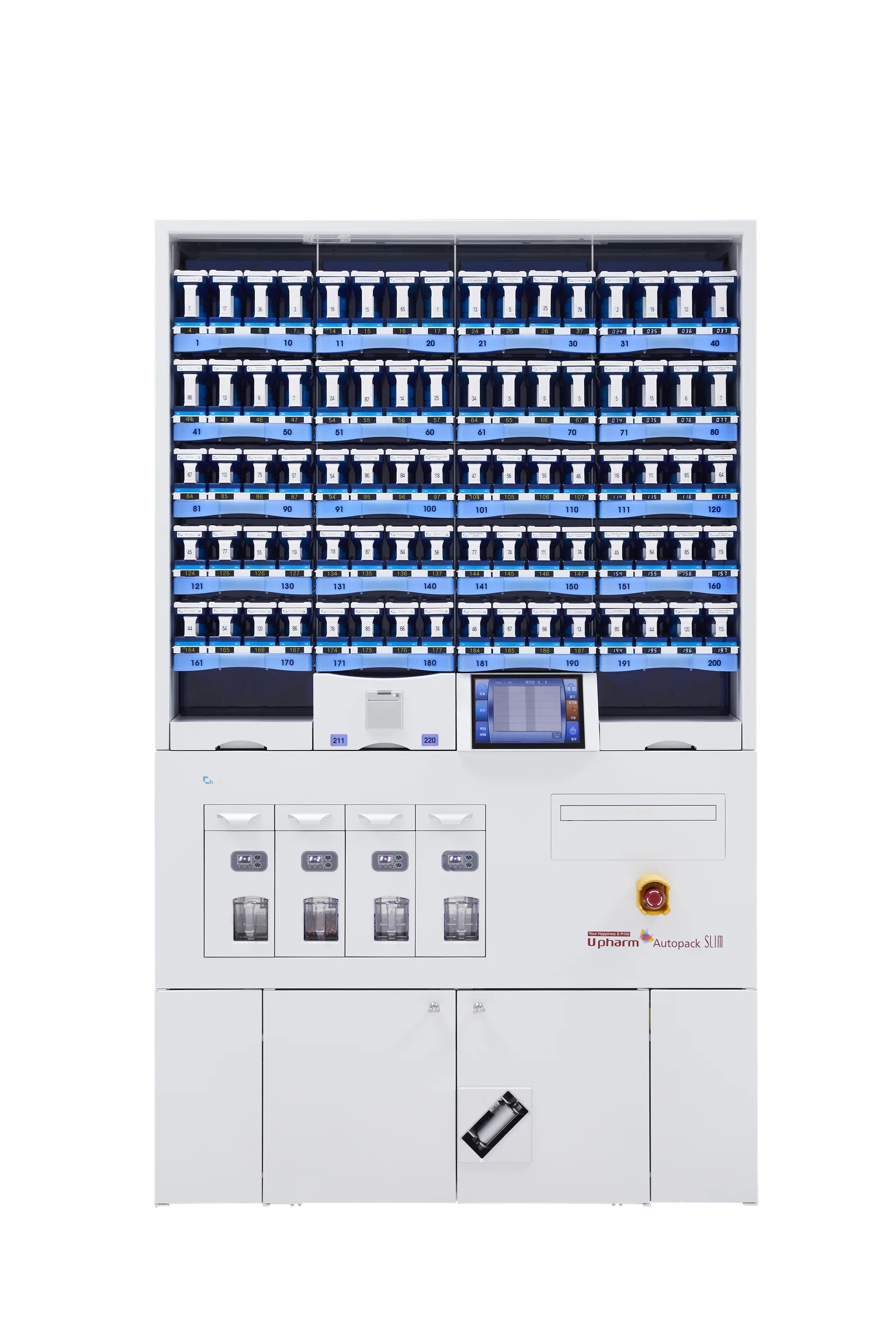
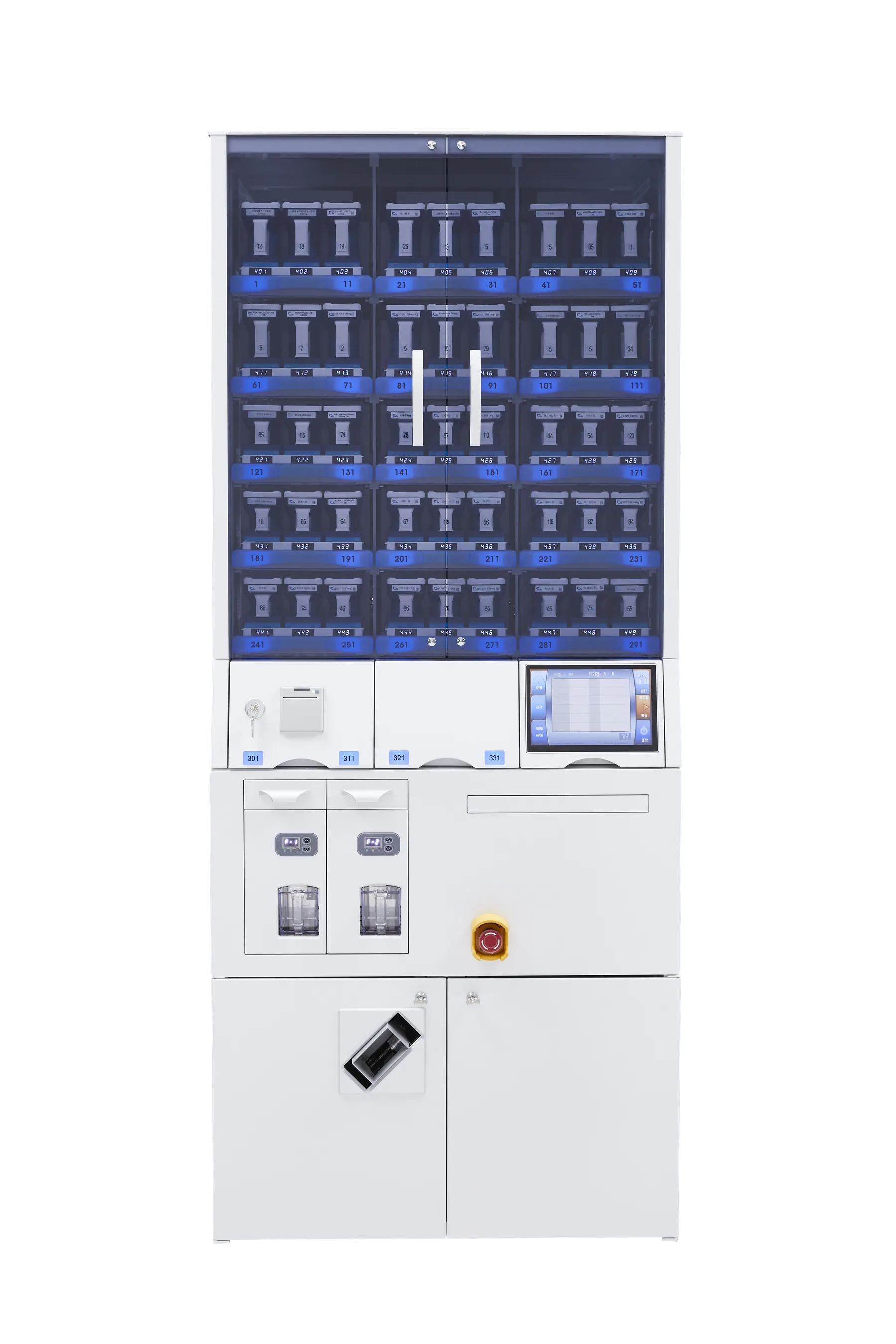
Automated pharmacy pouch packaging, built around your space and medication mix. Start with 52 cassettes and expand to 72 or 92 as your needs grow.
Three FSP units. A 30-cell MDU. One expandable platform.
- 52 → 92
- Expandable cassette capacity
- 670 × 490 mm
- Main-body width × depth
- 3 FSP + 30-cell MDU
- Flexible medication handling
- 60 /min
- Unit-dose packaging speed
ROOM FOR YOUR NEXT STEP
A smaller footprint. A bigger opportunity to rethink your workflow.
For community and independent pharmacies starting or growing an adherence pouch service, CAP(EX) brings cassette dispensing and non-cassette handling into one compact system.
Flexible medication handling
Bring regular and occasional medicines into one pouch packaging workflow, with flexible loading options for suitable medicines that do not fit standard cassettes.
Expansion planning
Start with 52 cassettes and expand to 72 or 92 by adding 20-cassette blocks. Keep the same base and control platform as your medication needs grow.
Space conscious
A slim, compact design makes efficient use of pharmacy space and supports convenient positioning and installation. All three models share a 670 × 490 mm footprint; only the height changes.
Modular design
Separate modules make problems easier to identify during maintenance and simplify access for servicing and component replacement.
THE RIGHT ROUTE FOR EACH MEDICINE
More flexibility beyond the cassette.
Handle non-cassette medicines with FSP and MDU, and keep everyday replenishment accessible with the T-slide cassette system.
 3 units on every model
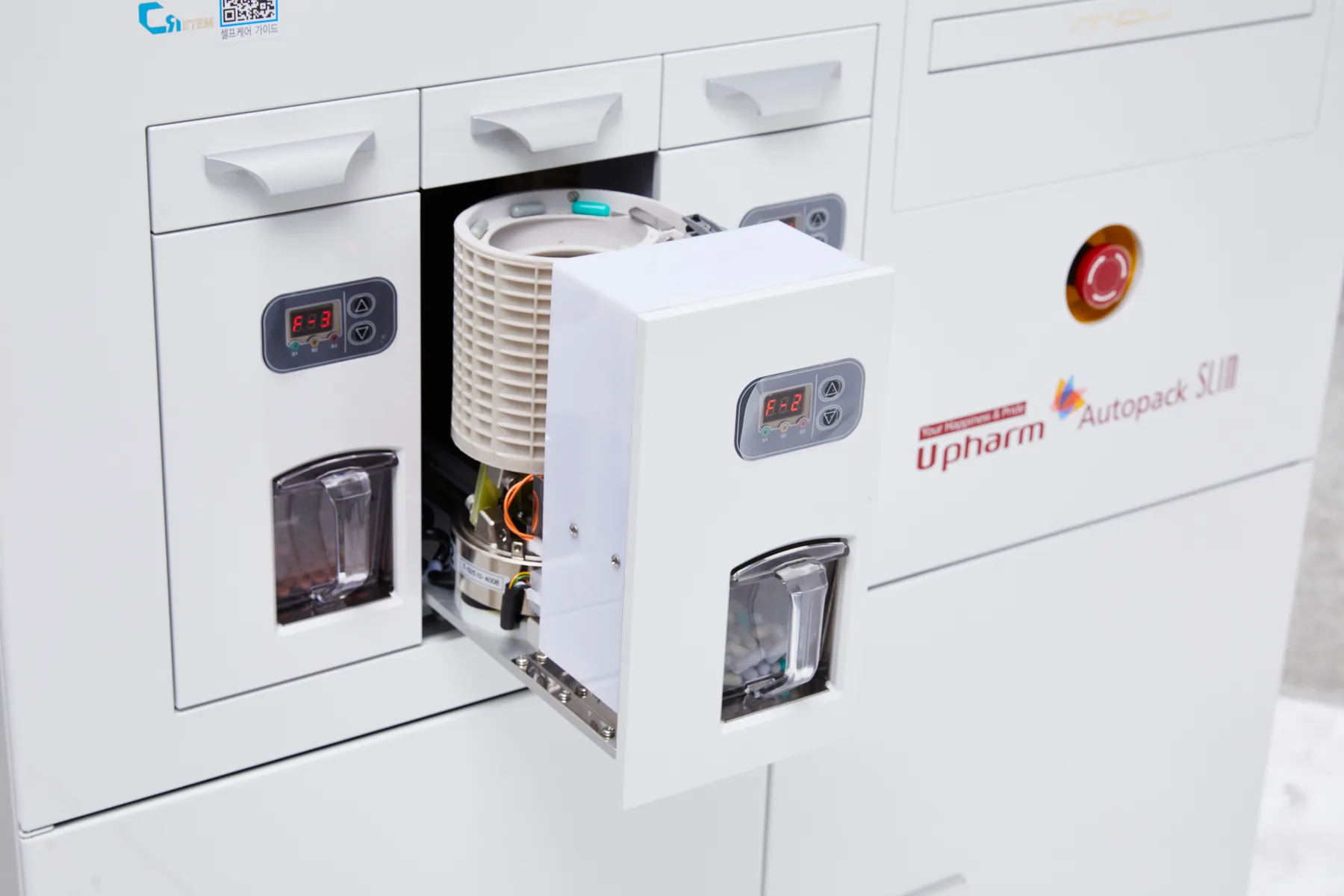
Free Shape Packing
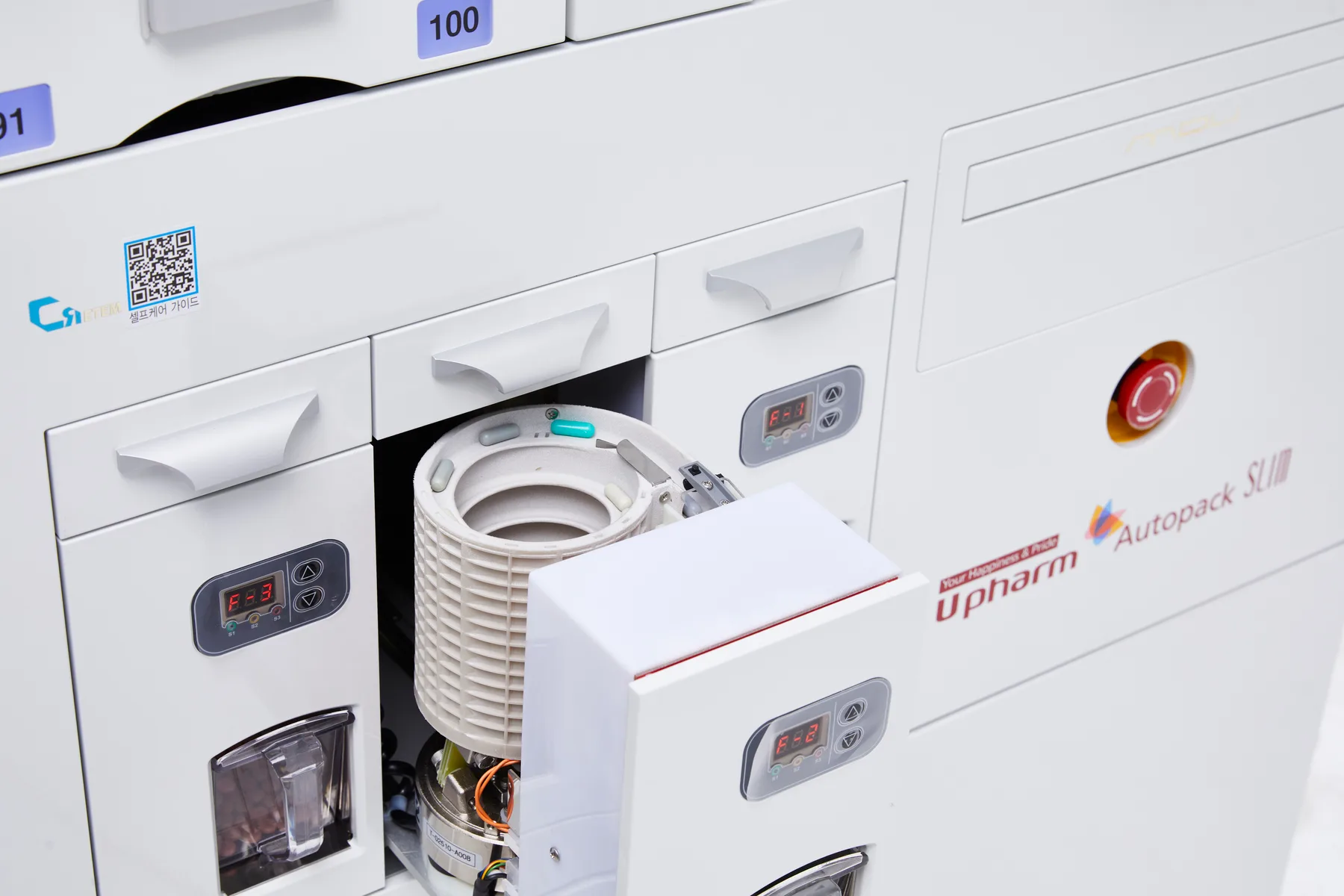
Load suitable half tablets, irregular shapes or low-frequency medicines into the FSP drum for automatic dispensing without an additional dedicated cassette. Remaining tablets are automatically collected after dispensing. Medicine loading is designed to reduce direct hand contact.
Three FSP units support a changing medication mix.
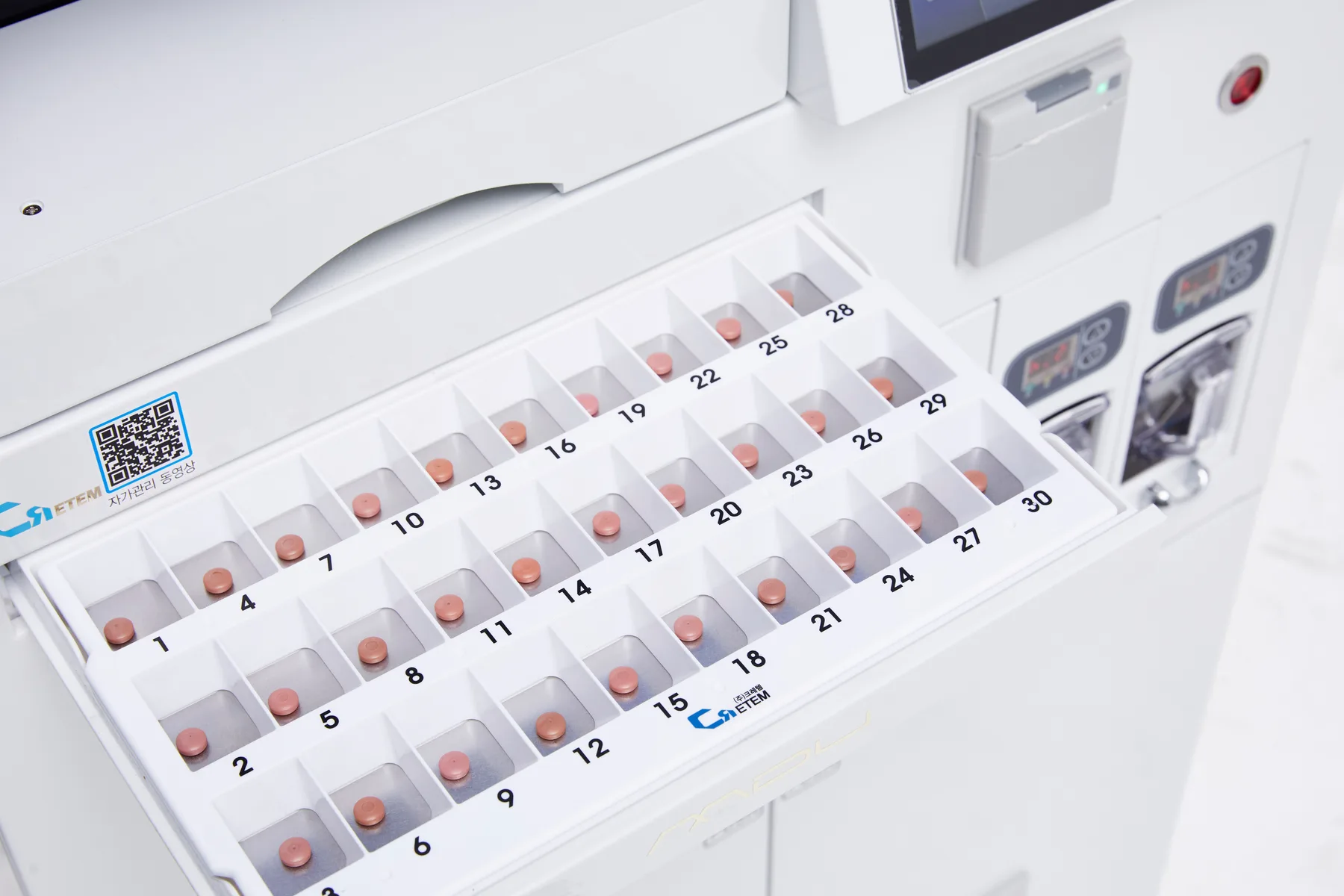
Manual Divide Unit
Manually prepare suitable half tablets, quarter tablets and occasional medicines in a numbered 30-cell tray. The MDU adds these doses to the pouch packaging sequence.
A practical option for small prescription runs.
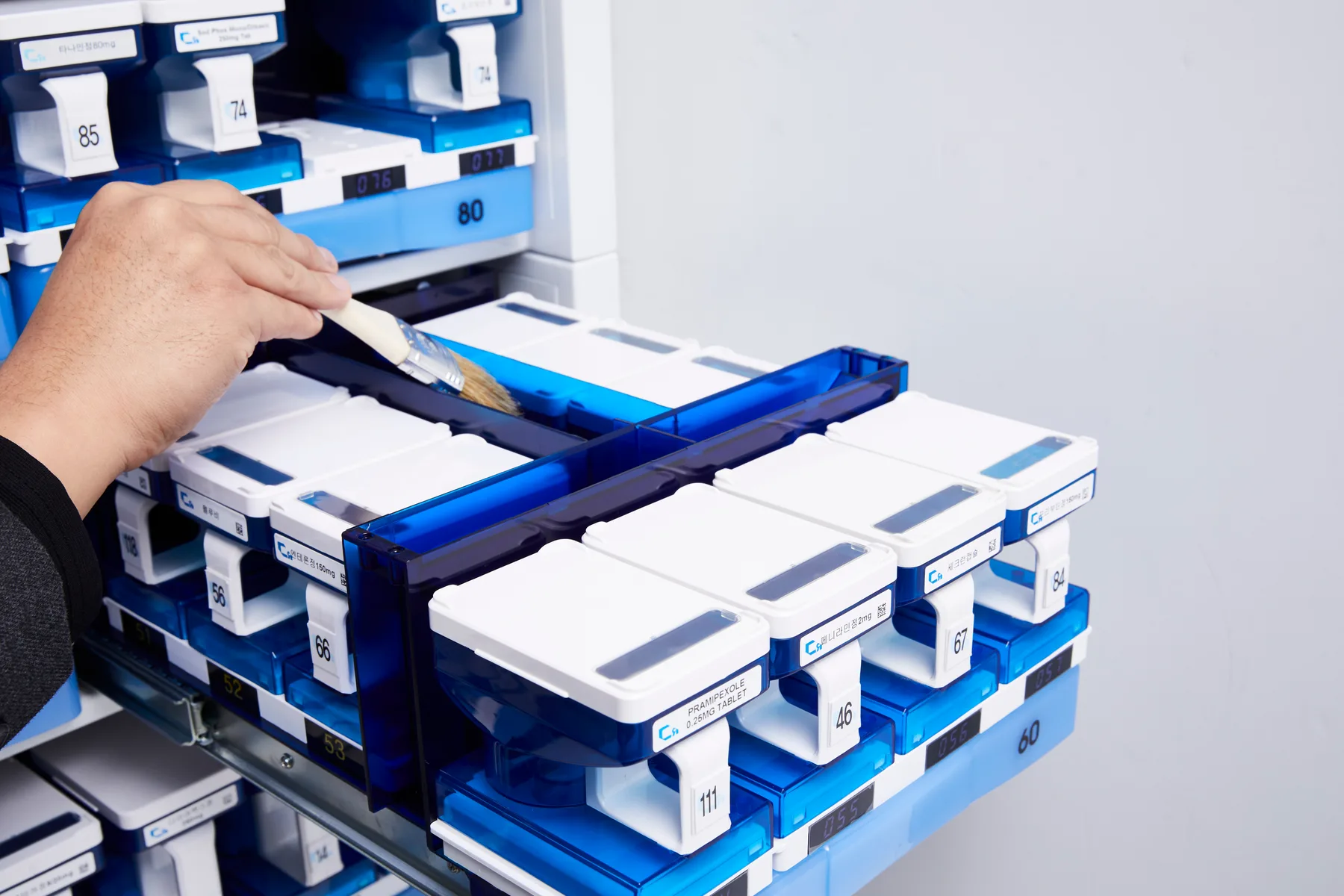
T-slide cassette system
Individual sliders provide easy cassette access. Front access allows replenishment and cleaning without opening the sliders, while an airtight medicine passage simplifies maintenance.
Convenient front access with individual cassette slides.
PRODUCT FEATURES
Features that support your daily workflow.
Explore features for efficient dispensing, clear controls, connected operation and operator safety.
Automated tablet dispensing and packaging reaches a maximum of 60 unit-dose pouches per minute, with front-access medicines helping keep replenishment efficient.
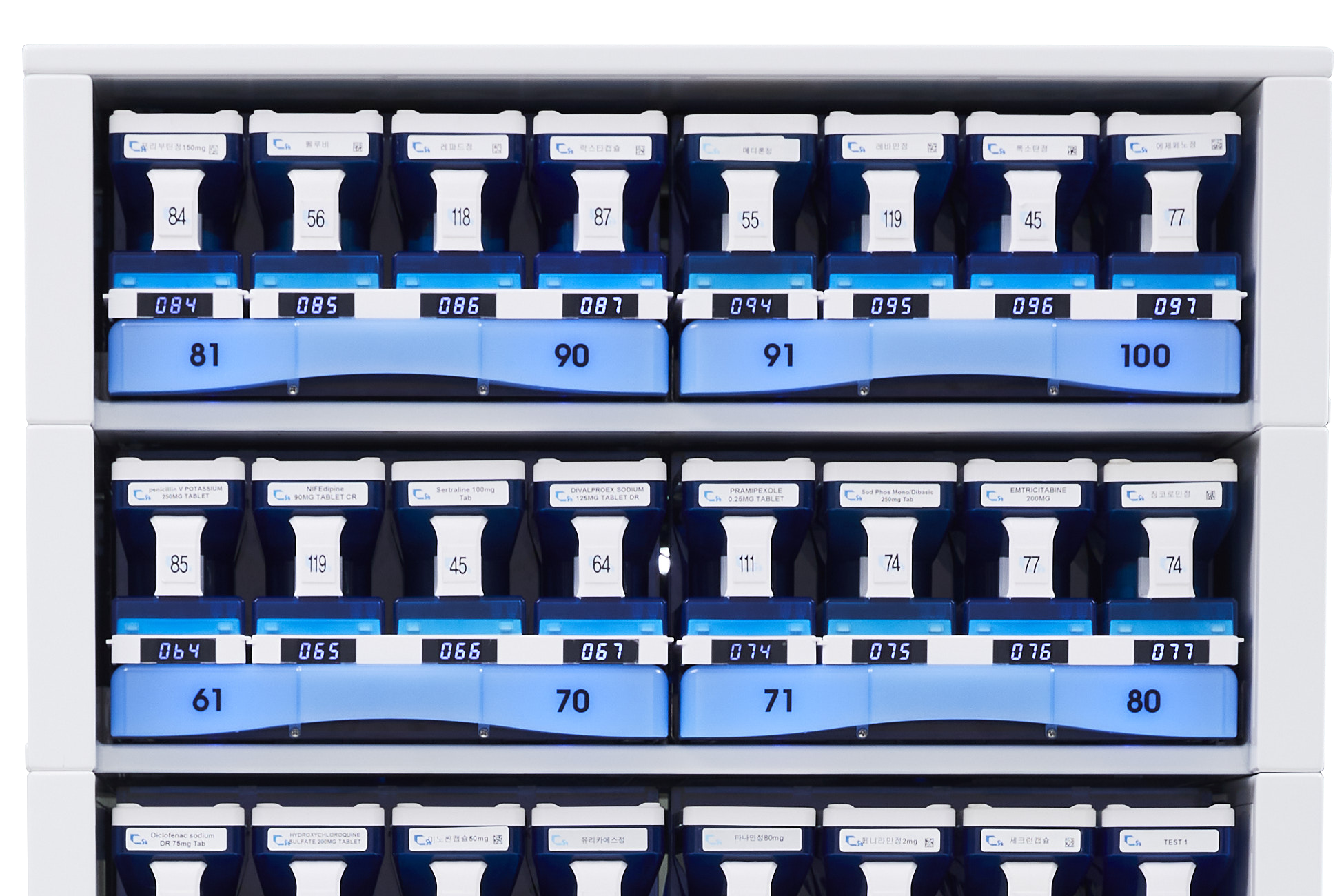
High-Speed Dispensing – 60 pouches/min Dedicated medication cassettes use a tablet-stopper mechanism to support controlled dispensing. Small, medium and large cassette sizes accommodate your configured medication mix.
Numeric displays and unique ID chips let the system identify each FND cassette when moved between compatible positions, giving your team flexibility to arrange medicines for convenient access and replenishment.
Frequently used medicines are positioned at the front for convenient refilling. Accessible cassette positions help reduce interruptions during replenishment.
View operating status, refill notices, error messages and FSP preparation instructions for half tablets and specially shaped tablets on the 10.1-inch touchscreen. Enter packaging orders and manage operation from the same panel.
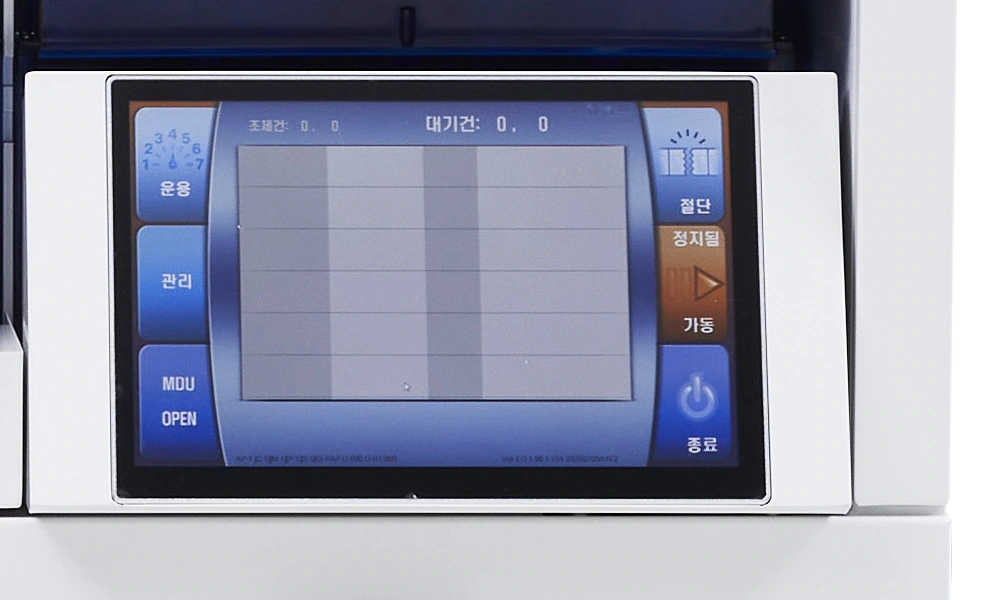
Touchscreen Control Panel Tablet preparation message for half tablet and specific shape medicines is displayed on advanced UMP screen, or type, quantity, cassette number, number of dispensed medicines are printed at the separate FSP direction for clear medicine input. This system is for safe dispensing and also shared with MDU.
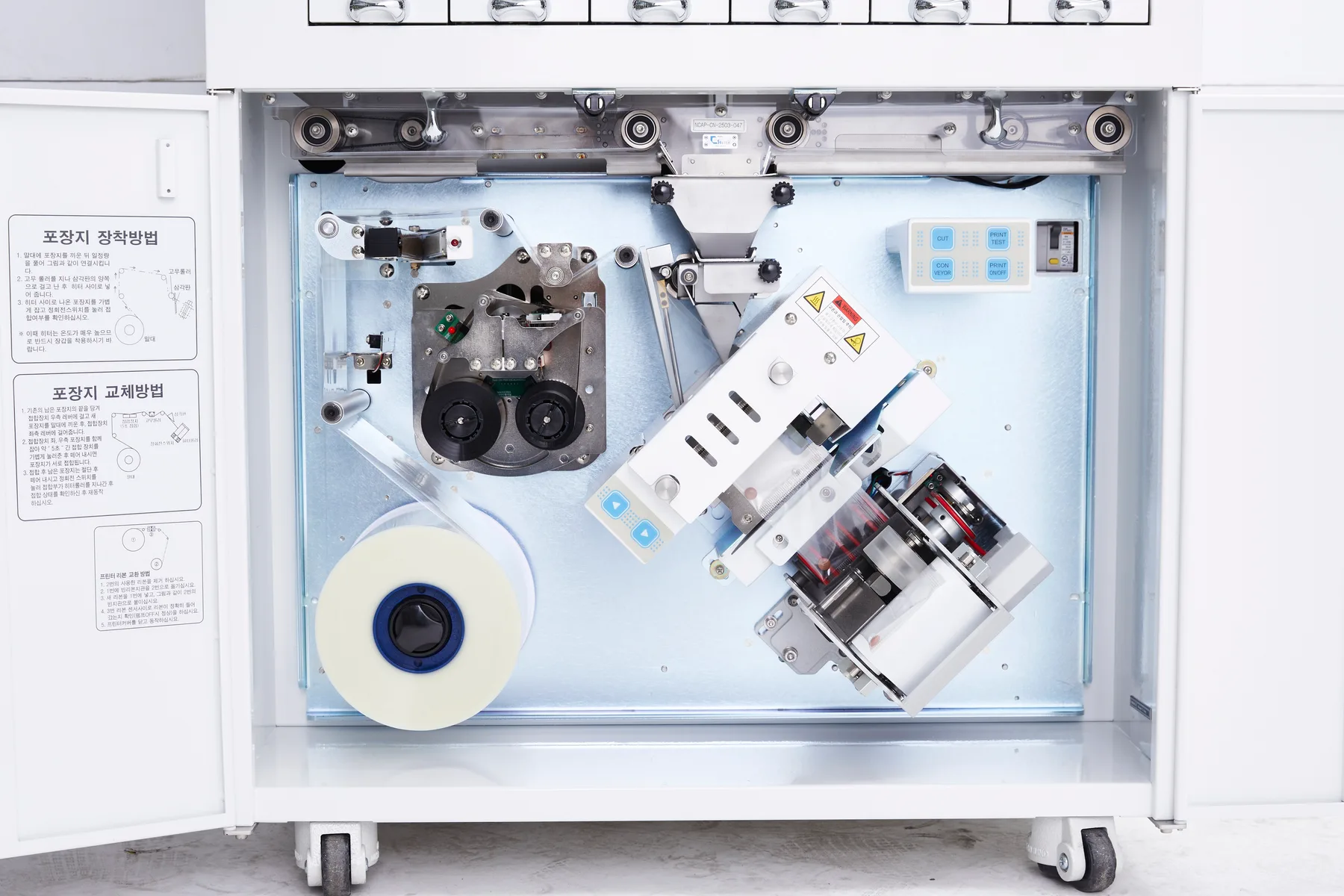
Print patient names, medicine details, administration times and instructions directly on each pouch. Configurable layouts support up to 99 print parameters, including 1D or 2D barcodes.
A tilting printhead supports print quality, while the printer mechanism is designed for convenient ribbon replacement and routine access.
Customisable audio alerts draw attention to operating conditions and errors. Recorded voice messages can provide familiar instructions for your team.
Only one workstation can control and manage the system with multiple packagers. The packager software can support any local language worldwide by only one language resource file change.
Attaching barcodes at cassettes and linking the medicines within the cassette with an electric balance by the server, it inputs the stock.
Special program software designed to be compatible with all the medical solution system allows you to easily upgrade your system and supports you in solving potential problems.
Protective features around pouch sealing and cutting help safeguard operators. A front emergency-stop button allows operation to be stopped immediately.
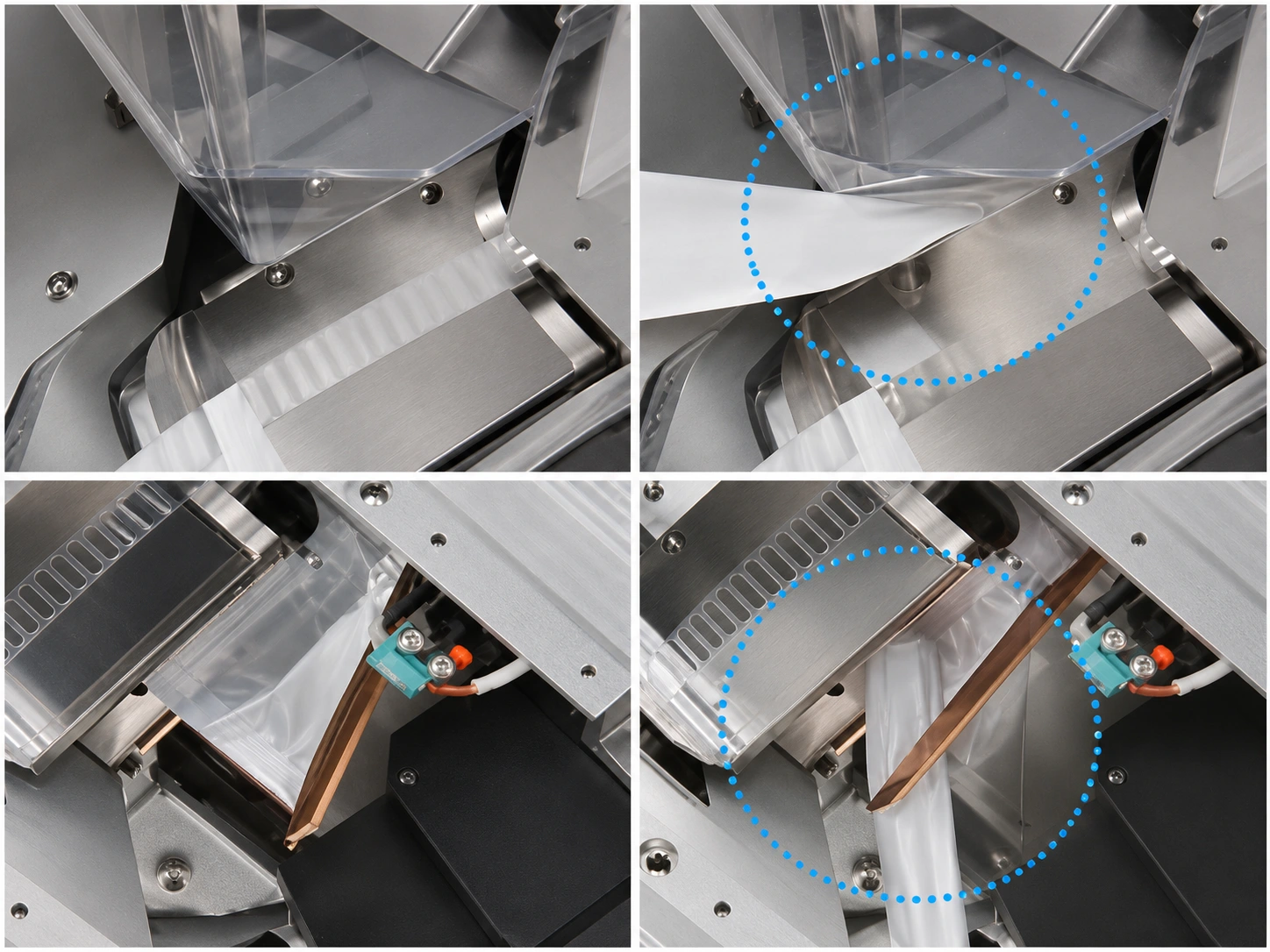
Safety Features for Users When an error occurs while packing process, the machine recognize and retrieve the pills and initiate repacking process automatically.
Patented technologies for FSP(Free Shape Packing), cassette, counting module, error detection device realize a whole new level of products!
FROM ORDER TO POUCH
From medication order to finished pouch.
- STEP 01
Receive an order
Use the supported order interface or internal entry on the industrial PC touchscreen.
Confirm local software compatibility.
- STEP 02
Dispense from cassettes
Dedicated medication cassettes dispense tablets with infrared photodetection.
Detection is separate from visual content verification.
- STEP 03
Add non-cassette items
Use FSP for suitable free-shape and half tablets, and the 30-cell MDU for manually divided medications.
- STEP 04
Print and seal
Thermal-transfer printing places the configured label on the wrapper before pouch sealing.
Validate readability and label layout.
- STEP 05
Verify and release
Pouches exit the lower cabinet.
Complete your pharmacy’s checks, exception handling and release process.
A demonstration built around your questions.
Ask to see loading, replenishment, non-cassette handling, printing and pouch output.
CHOOSE YOUR STARTING POINT
52. 72. 92. Room to grow in place.
The modular design adds cassette blocks as your needs change. All three configurations share the same width, depth, three FSP units and 30-cell MDU.
Compare all three models Scroll the table sideways on smaller screens →
| Model | CAP(EX)-52FS | CAP(EX)-72FS | CAP(EX)-92FS |
|---|---|---|---|
| No. of Cassettes | 52EA | 72EA | 92EA |
| Types of Cassettes | S(12), M(20), L(20) | S(32), M(20), L(20) | S(52), M(20), L(20) |
| Means of Control | Windows 10, Touch Screen 10.1" | ||
| Refinement & Detection | Infrared Photodetection | ||
| Drug Storage | Cabinet type with cassettes installed in each single drawer | ||
| Dispensing Speed | Max. packing speed : 60 unit pouches(Unit dose) Average packing speed : 55 unit pouches(Multi dose) | ||
| Printing on the Wrapper | Thermal printing(thermal transfer) : No limit to the number of characters or font size | ||
| Wrapping Paper Size | 75mm x 70mm or 55mm x 50mm by order | ||
| Input | OCS linkage or internal input | ||
| FSP | 3 Unit | ||
| MDU | MDU 30Cell | ||
| Size of the Main body (W×D×H, ft) | ≈ 2.20 × 1.61 × 5.12 | ≈ 2.20 × 1.61 × 5.71 | ≈ 2.20 × 1.61 × 6.27 |
| Weight of the Main body (KG) | 200 | 225 | 250 |
| Power Consumption | 200W(Max 600W) | ||
| Power Supply | 200W(Max 600W) | ||
MORE THAN THE MACHINE
Start with a system. Plan for its working life.
Your configuration, software, service and supplies should be clear before you commit.
Connect your software
Share your pharmacy software and version. Confirm the interface, licences, data fields, vendor responsibilities and test orders.
Explore integration planningPrepare your pharmacy
Review clearances, electrical supply, IT security, cleaning, staff training and the final verification process.
Talk through site requirementsUnderstand the total cost
Include setup, integration, supplies and ongoing service. Compare usable staff time with actual cash savings.
Explore the ROI calculatorMAXIS AFTER-SALES SUPPORT
Support for the everyday.
- One-year limited company warranty
- After-sales service and spare parts
- Consumable supply
- Annual service support for an additional fee
Warranty terms, exclusions, service scope and annual fees are provided with your proposal.
BEFORE YOU DECIDE
Your questions. Clearer answers.
The practical details of buying a compact pharmacy pouch packaging system.
Is CAP(EX) suitable for a small community pharmacy?
Yes. CAP(EX) is designed for small to medium-sized pharmacies, with a compact 670 × 490 mm cabinet footprint and a choice of 52, 72 or 92 cassettes. MAXIS can help you choose a configuration around your medication mix, workload and available space.
What is the difference between FSP and MDU?
Free Shape Packing (FSP) automatically dispenses suitable half tablets and irregular shapes without a dedicated cassette for each medicine. The Manual Divide Unit (MDU) is a numbered tray for medicines prepared by hand. Each CAP(EX) model includes three FSP units and a 30-cell MDU.
Can I add more cassettes as my pharmacy grows?
Yes. Start with 52 cassettes and expand to 72 or 92 by adding 20-cassette blocks to the same base. Width and depth stay the same while height increases. MAXIS can provide the expansion requirements and costs for your system.
What is the CAP(EX) packaging speed?
CAP(EX) has a maximum unit-dose packaging speed of 60 pouches per minute. Actual output depends on the medication mix, loading, replenishment and checking process. A demonstration can help you assess performance with your pharmacy’s workload.
Can CAP(EX) connect to our pharmacy software?
CAP(EX) supports OCS (Order Communication System) linkage and direct packaging-order entry. For systems such as Kroll, Fillware, PioneerRx or BoxLab, share your software name and version with MAXIS so we can assess the CAP(EX) interface, licences, setup and testing required for your installation.
What information can be printed on the pouches?
Pouches can display patient names, medication details, administration times, instructions and 1D or 2D barcodes using thermal-transfer printing. Label layouts can be configured for your workflow, with sample output reviewed for readability and scanner compatibility.
What warranty and after-sales support does MAXIS provide?
MAXIS provides a one-year limited company warranty, after-sales service, spare parts and consumable supply. Annual service support is available for an additional fee. Your proposal will set out the warranty terms, service coverage and fees.
How much does CAP(EX) cost?
Pricing depends on the model, cassette configuration, software, options and services you need. Contact MAXIS for an itemized quotation covering your equipment, setup and ongoing support requirements.
What do we need to prepare before installation?
Prepare your floor plan, medication list, daily workload and pharmacy software details. MAXIS will review the installation drawing, access and service clearances, electrical supply and IT requirements with your team, along with training and workflow arrangements.
Does CAP(EX) support unit-dose and multi-dose packaging?
Yes. CAP(EX) supports unit-dose and multi-dose pouch packaging. Unit-dose pouches contain a single medication dose; multi-dose pouches group suitable medicines for the same administration time. MAXIS can help you review the format, medication suitability and label layout for your workflow.
What consumables does the system use?
The packaging system uses compatible pouch wrapping material and thermal-transfer print ribbon. Pouch dimensions are 75 × 70 mm, with 55 × 50 mm available by order. MAXIS supplies consumables and can confirm the correct materials, ordering quantities and lead times for your configuration.
How are cleaning and routine maintenance handled?
Front-access cassettes and the T-slide arrangement make refilling and cleaning accessible. Modular components and printer-ribbon access support routine maintenance. Your team should follow the equipment’s cleaning instructions, with procedures reviewed for your medicines and workflow.
Does infrared detection replace the final pouch check?
No. Infrared detection monitors tablet dispensing; it is different from visually checking the contents of a finished pouch. Your pharmacy’s verification and release process remains part of the workflow. Ask to see detection, error recovery and sample pouches during a demonstration.
How many patients can one CAP(EX) serve?
Cassette capacity is the number of medication positions, rather than a patient limit. Practical patient capacity depends on medicines per pouch, dose schedules, operating hours, replenishment and verification time. Share a representative workload with MAXIS to assess the right model.
COMPARE YOUR OPTIONS
Different capacity. The same focus on fit.
YOUR PHARMACY. YOUR NEXT STEP.
Let’s find your fit.
Bring your medication mix, workload and available space.
We’ll help you define the right CAP(EX) configuration.